Q1 What are the main core products of Youma Service?
Youma Service covers maintenance, satisfaction, and risk management. Maintenance includes intelligent telephony, service and repair requests, repair coordination, and reconciliation. Satisfaction includes touchpoint ratings, surveys, analytics, customer follow-up, and targeted improvement. Risk management includes risk standards, inspection plans, mobile inspections, rectification and closeout, defect feedback, and reusable case knowledge.
Q2 What customer service services can intelligent desk phones handle?
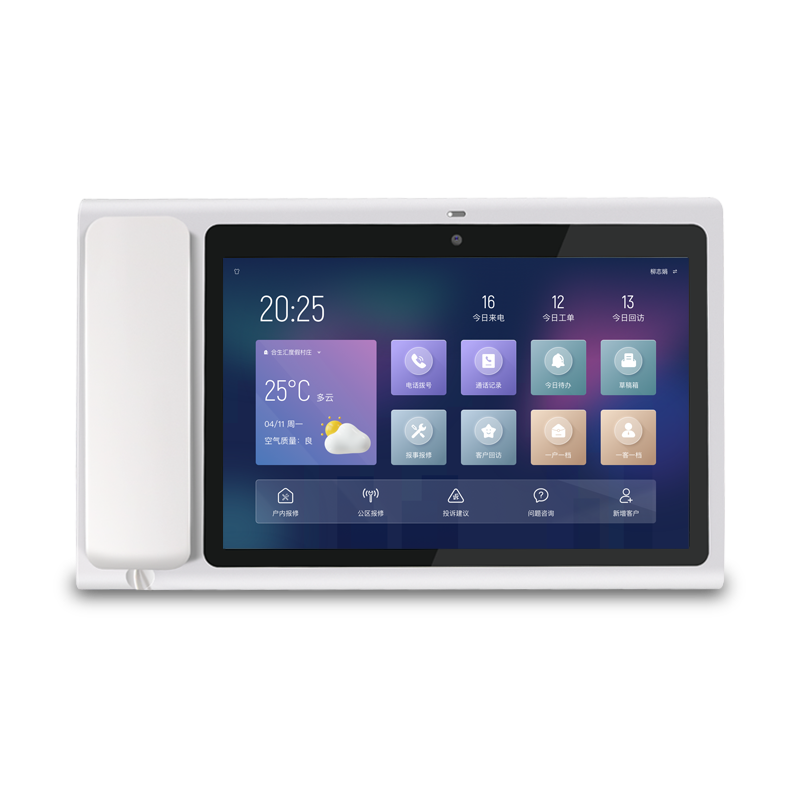
The intelligent desk phone supports incoming call pop-up screen, one file per household, reception registration, one-click dispatch, pending tasks, progress inquiry and customer follow-up. Customer service can directly view customer and work order information when answering the phone, and complete registration and order dispatch during the call.
Q3 How do reports for repairs circulate between customer service, engineers, and contractors?
Customer requests enter one platform from WeChat, phone calls or in-person visits. Customer-service teams register and dispatch each request; contractors handle warranty issues, while property teams or third parties handle other repairs. Assignees accept work orders and update progress online, and the record is closed after customer reinspection and a satisfaction rating.
Q4 What is currently covered in maintenance reconciliation?
The current product information clarifies the third-party maintenance task statistics, automatic reconciliation and real-time settlement capabilities. Detailed rules such as reconciliation cycle, settlement form, contractor confirmation and objection processing need to be confirmed in combination with the current product version and project scope.
Q5 What conditions can satisfaction surveys be initiated under?
Surveys can be configured by group, city company, project, business scenario, customer stage and customer-profile tag, with rules for validity periods, delivery times, channels, failed-delivery retries and response reminders.
Q6 What should be done after a customer gives a low score?
The questionnaire can continue to collect the reasons for dissatisfaction when the score is low. The system automatically generates customer retention tasks according to maintenance conditions, and the executor checks the original evaluation, makes an appointment for door-to-door, completes maintenance registration and reports the results.
Q7 Which project phases are covered by risk control management?
Risks and defects can be continuously collected from project opening, delivery inspection, risk inspection, mock acceptance, repair rectification, warranty process, owner complaints and satisfaction surveys. The resulting cases and pre-control measures can be reused in the design, construction, sales, occupancy warranty and property service phases.
Q8 How do risk issues form a closed loop rectification?
After the inspection finds the problem, multiple departments complete the joint judgment online, and clarify the scope of influence, risk level, lead person and rectification time limit. The problem is circulated according to the assignment, rectification, reinspection and write-off items, and the processing process continues to leave traces.